2026. Plato. How to Speak Freely: An Ancient Guide to Free Speech and Dissent. Princeton University Press. (A translation of Plato’s Apology with a bonus dialogue by Lucian.)
“I love and respect you, men of Athens—but I will obey the god rather than you. As long as I draw breath, I will not stop.”
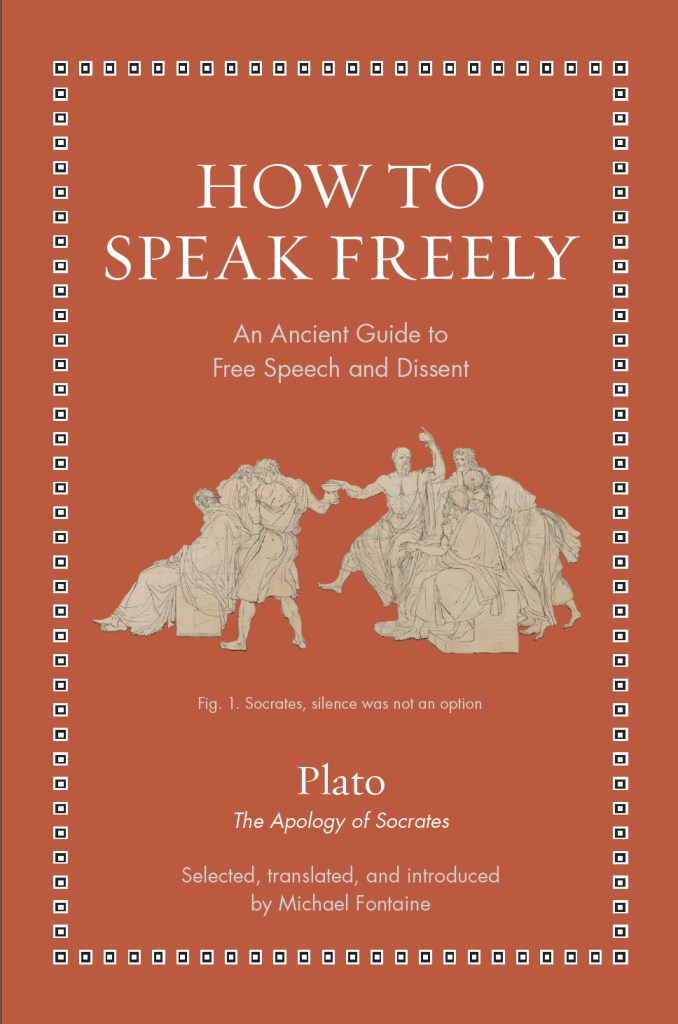
Free speech is back at the center of political and cultural debate, amid intense arguments over censorship on campus, in government, and in everyday life. How to Speak Freely offers a timeless and essential exploration of free speech through a lively new translation of Plato’s Apology, perhaps the most famous and important work on the subject in all of Western history. In it, Plato recounts the trial of Socrates in 399 BCE—one of the most powerful defenses of freedom of thought and speech ever written.
In Plato’s Apology, Socrates embodies the archetype of a person who thinks independently: a figure of conviction who pursued curiosity honestly, became convinced of unpopular truths, spoke candidly about them, and refused to grovel, pander, or recant—even to save his life. By insisting on his freedom and accepting the consequences, Socrates became the most famous martyr to free inquiry in history—and raised enduring questions about the value, dangers, and limits of free speech in a democracy.
How to Speak Freely supplements Plato’s Apology with a delightful fable on free speech told from a different angle. In the short dialogue The Gods in Council, Lucian (c. 125–180 CE) satirizes the concept of “platforming,” showing how free speech ideals are truly tested only when they’re truly applied.
Featuring an enlightening introduction and the original Greek on facing pages, How to Speak Freely is a powerful and thought-provoking examination of the rewards and risks of speaking one’s mind.
 Michael Fontaine
You must be logged in to post a comment.